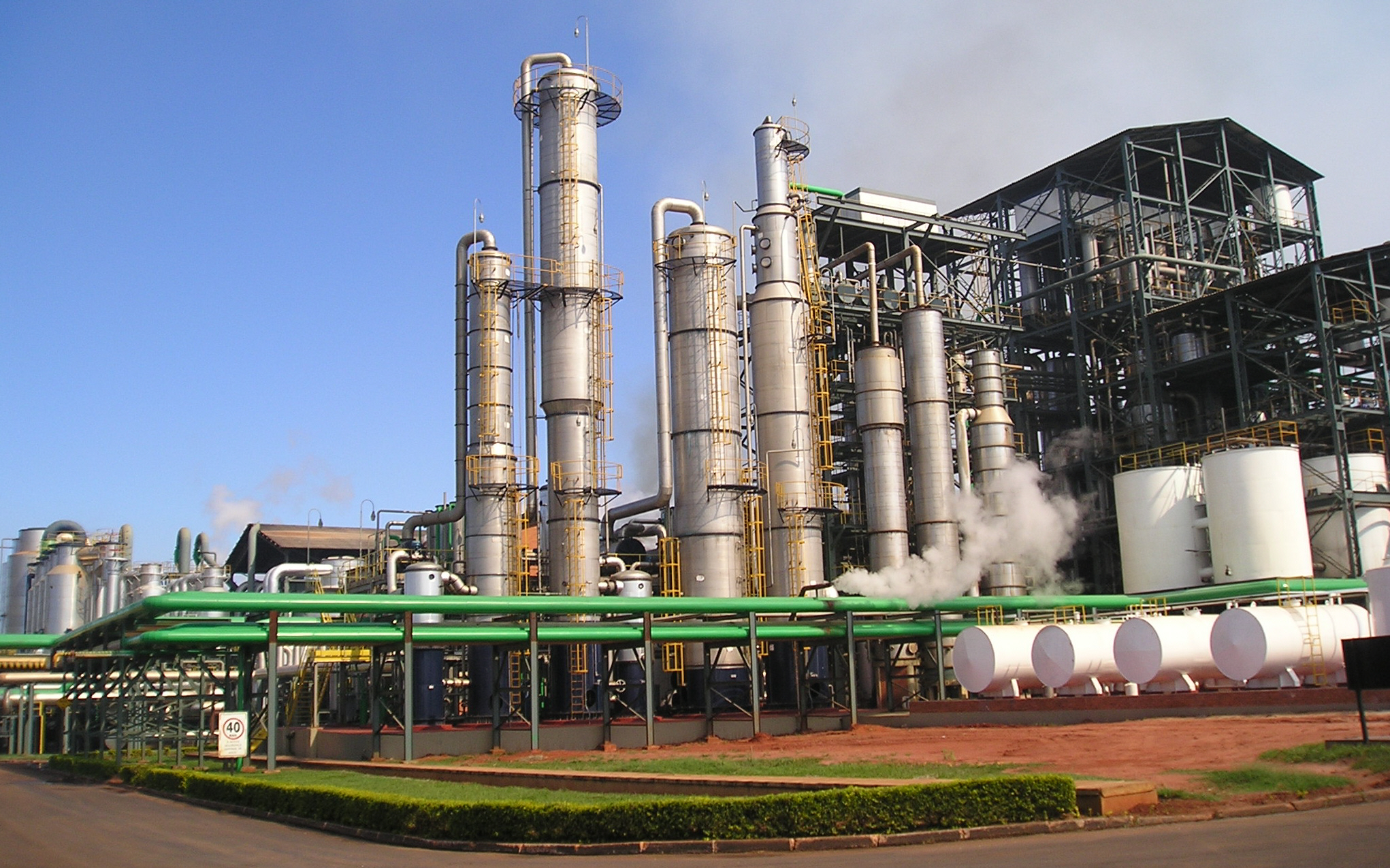
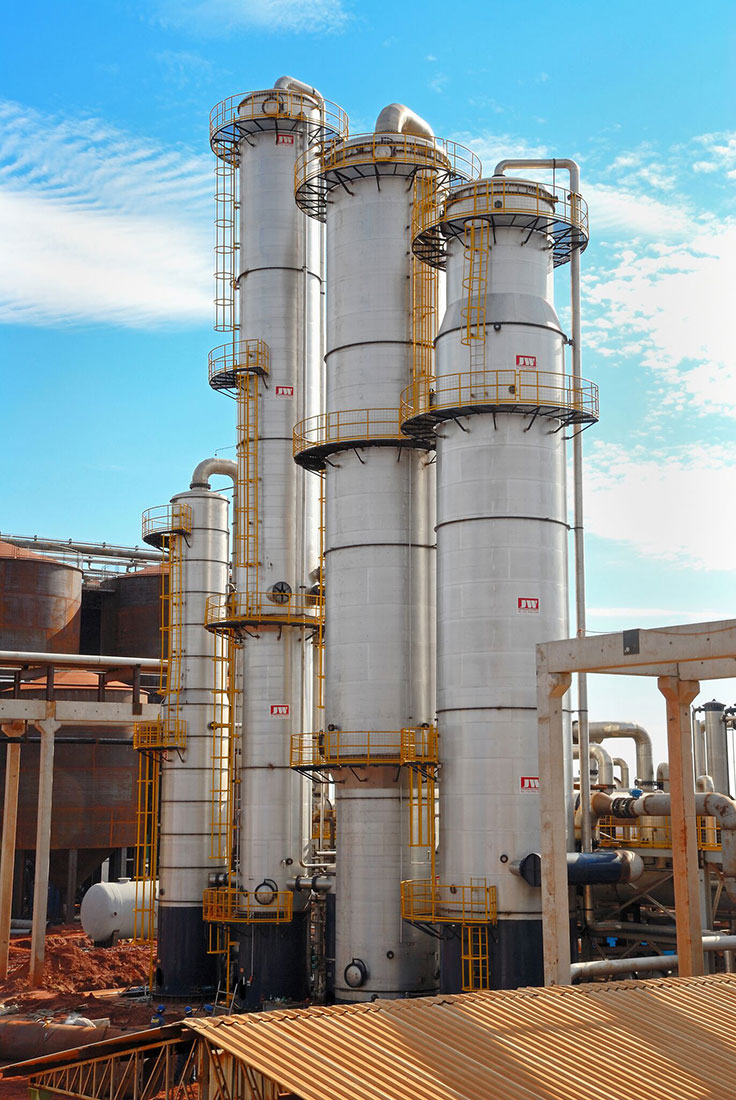
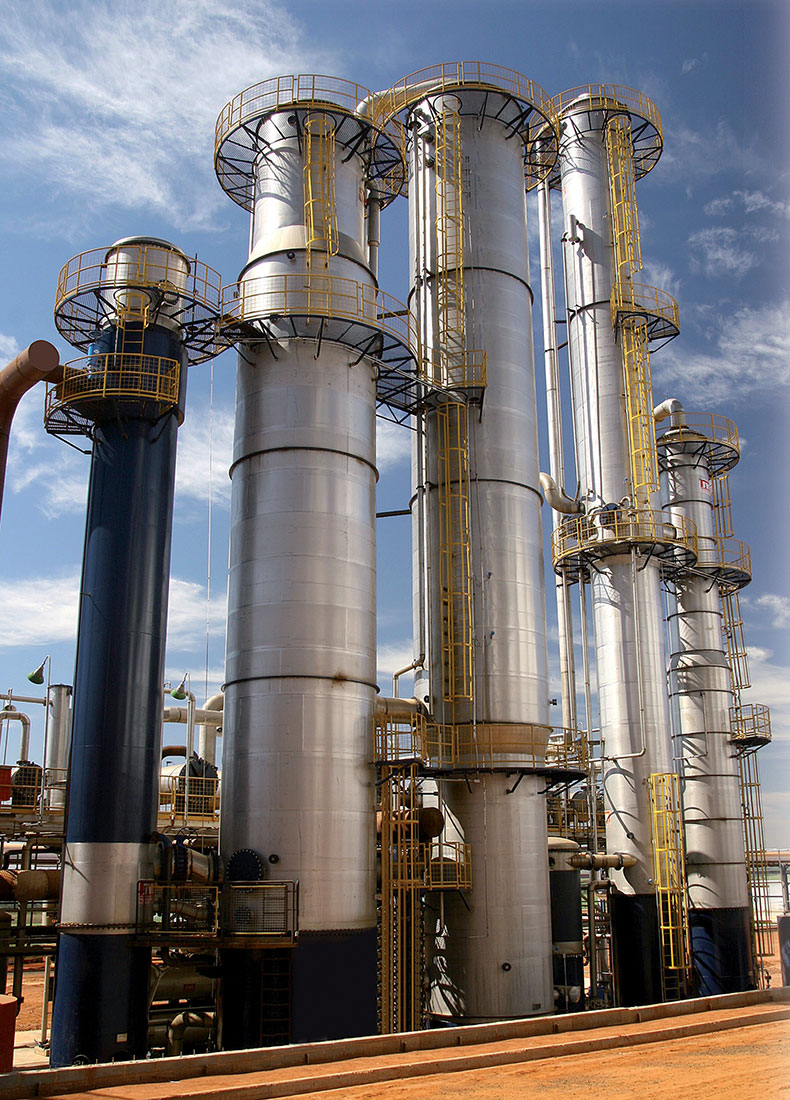
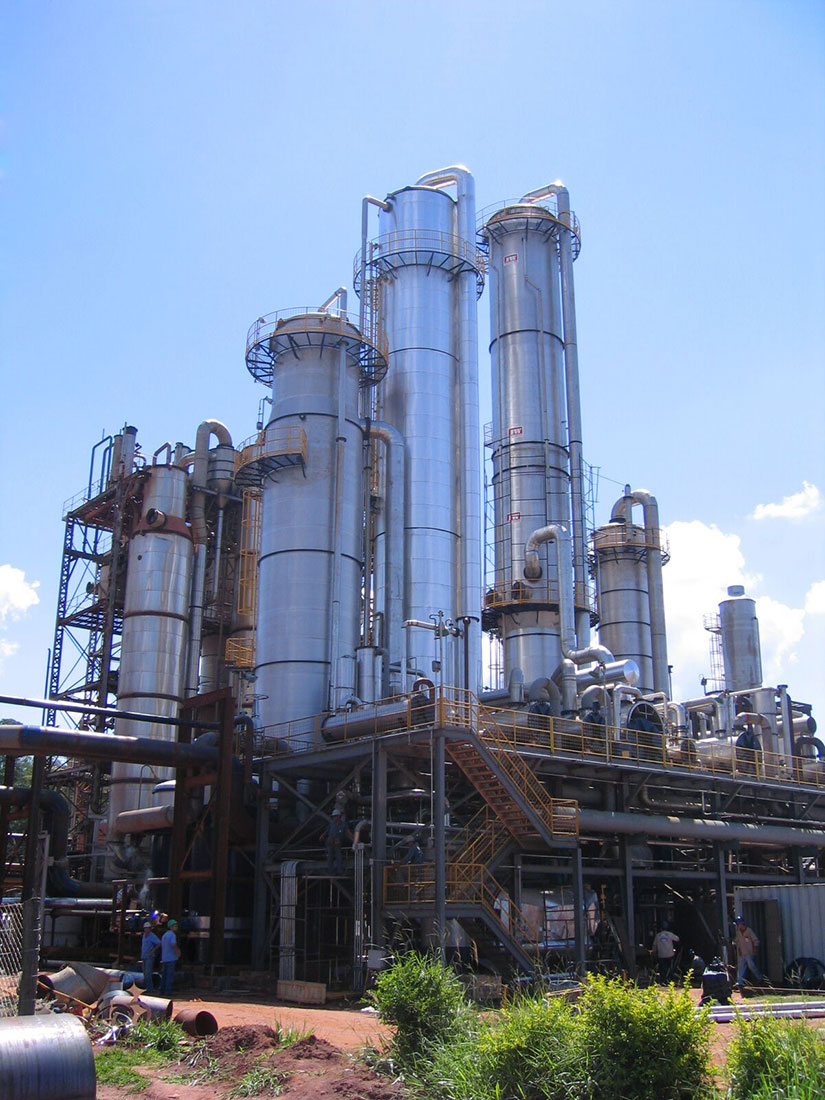
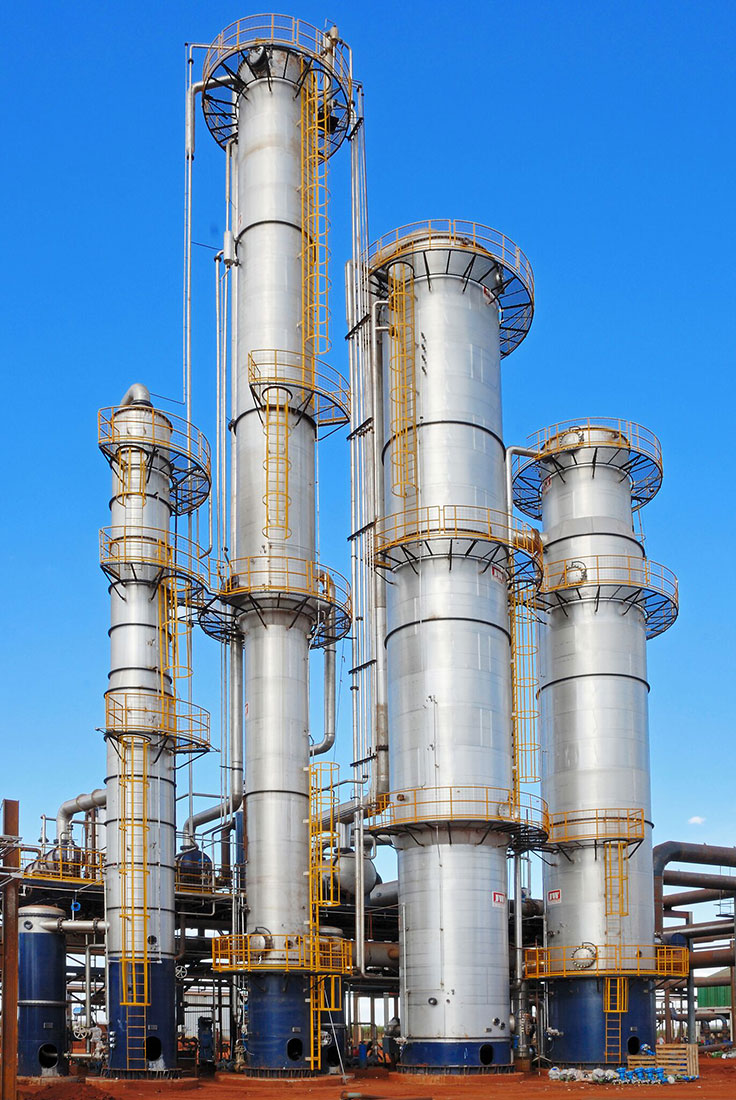
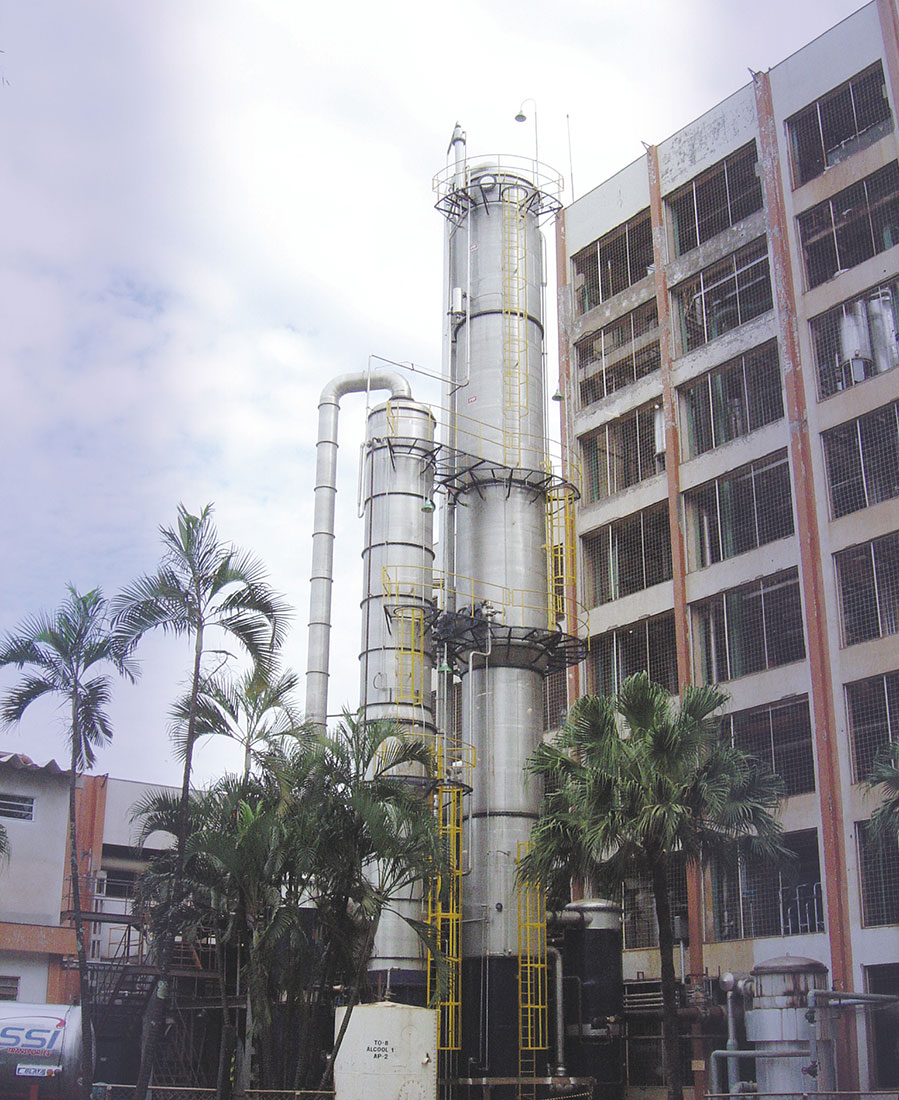
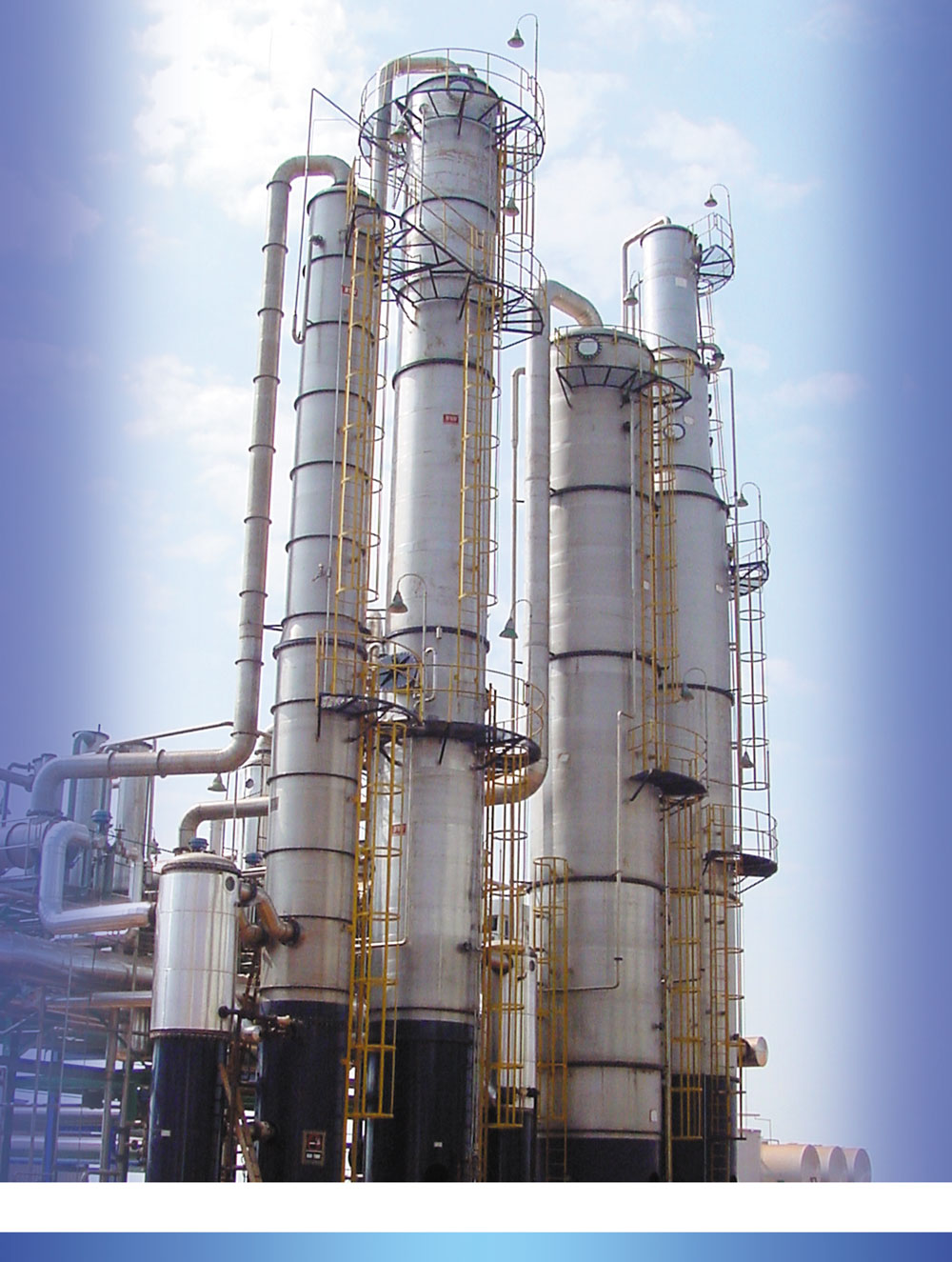
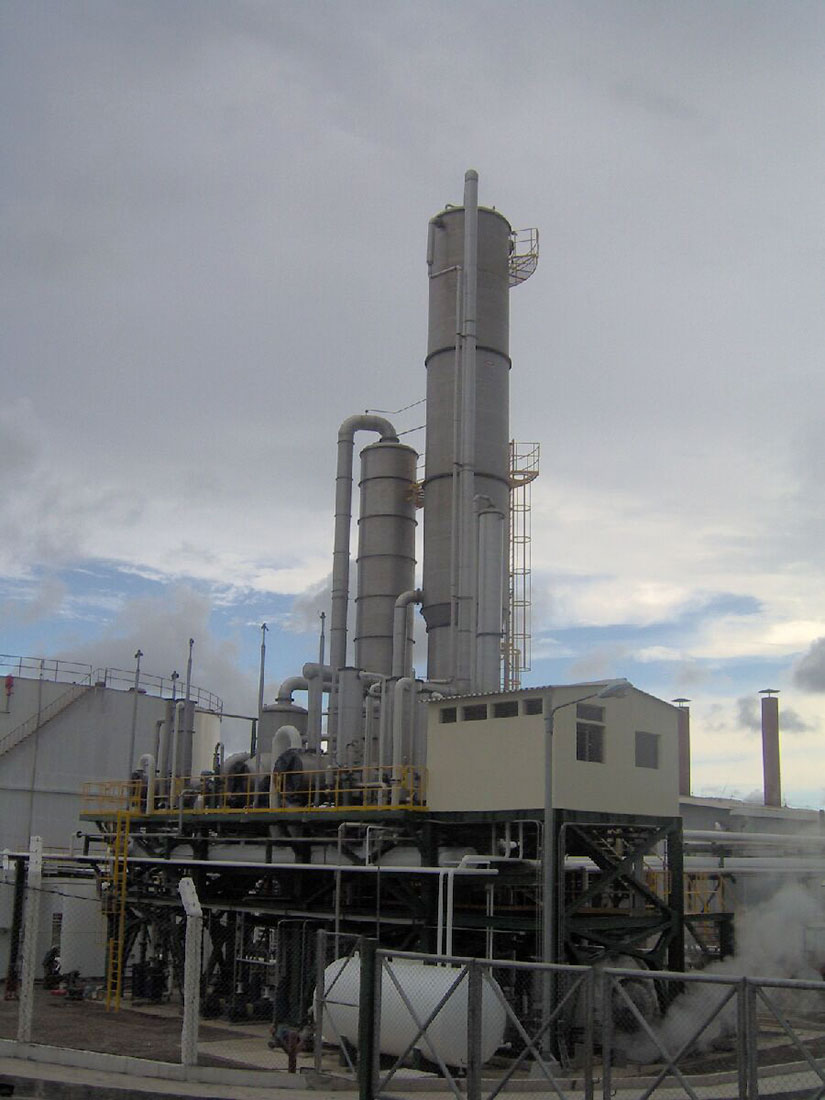
The BSM ethanol dehydration process represents an innovative approach that utilizes extractive distillation with monoethylene glycol, taking advantage of the high affinity of water for glycol. This method is based on glycol's ability to reduce water volatility, thus facilitating the release of anhydrous ethanol in the vapor phase.
This process offers a number of notable advantages:
NON-VOLATILE AND NON-FLAMMABLE DEHYDRATING AGENT: The dehydrating agent used, monoethylene glycol, is not only non-volatile but also non-flammable, ensuring safe and efficient operation.
REDUCED CONSUMPTION: BSM stands out for its significantly reduced consumption of steam, water, and dehydrating agent. This resource efficiency contributes to the operational and economic sustainability of the process.
OPERATIONAL ROBUSTNESS: A distinctive characteristic is its insensitivity to small variations in the alcoholic strength of the equipment's feed product. This operational robustness provides stability to the process, even in the face of fluctuations in input conditions.
In addition to these fundamental advantages, the BSM approach represents an innovative solution for ethanol dehydration, optimizing not only process efficiency but also operational safety and environmental sustainability. The use of monoethylene glycol as a dehydrating agent reinforces the commitment to safety, while reduced resource consumption highlights the system's economic efficiency.